HAZCOM
Hazard Communication, also referred to as “HAZCOM” and “The Employee Right to Know Act” was developed to ensure employers provide employees with important safety information for chemicals used in their workplace. Hazard Communication requirements are aimed at reducing the risk of chemical-related occupational illnesses and injuries by making available specific information to help identify and evaluate hazardous chemicals in the workplace. Tools such as Container Labeling and Safety Data Sheets (SDS) assist employers in identifying and communicating these hazards.
SDS: An SDS is a fact sheet developed by the manufacturer that contains information on all of the hazards associated with a particular chemical. It also provides guidance on how to protect your-self from these hazards and emergency information/procedures in the event of an accident. You may obtain an SDS from the manufacturer or on-line at the EHS website. Personnel must be trained to be able to read an SDS and understand the hazards presented by various substances.
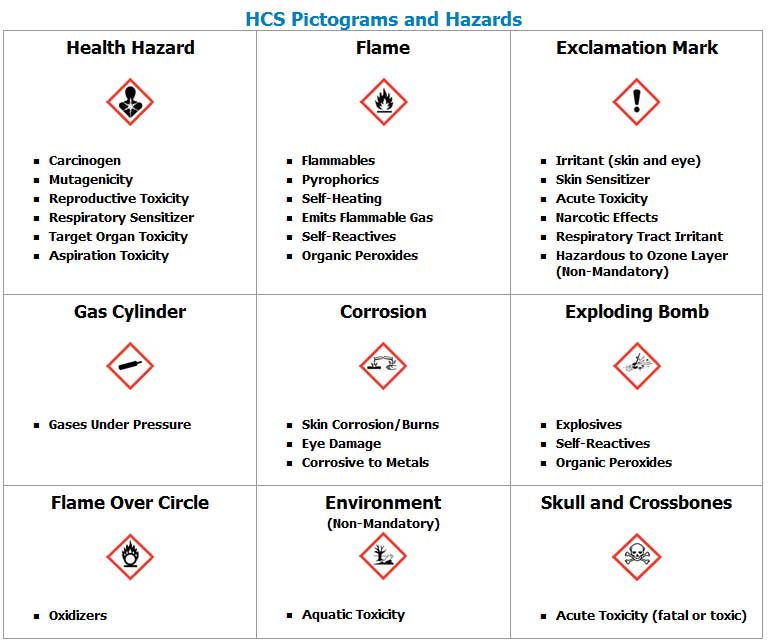
Container Label: Every container is required to have a label that lists all of the hazard information for the chemical it contains. When portioning chemicals into separate containers such as generic spray bottles, employees must label these containers with the chemical’s name and a hazard warning briefly describing the hazardous effects of the chemical. This includes terms such as “flammable” and “causes lung damage.”
Information Found In SDS Information Required On Manufacturer Labels:
- Identification and Manufacturer’s Information
- Hazard Identification
- Composition, Chemical Ingredients
- First Aid
- Fire Fighting Measures
- Accidental Release Measures
- Handling And Storage
- Exposure Control/Personal Protection
- Physical and chemical Properties
- Stability and Reactivity
- Toxicological, Ecological Information,
- Disposal and Transportation Information
- The identity of the hazardous chemical
- Appropriate hazard warnings
- The name and address of the chemical
- Manufacturer, importer, or other responsible party
- First Aid Information
- Chemical Ingredients
Additional Information:
- Know where your work area’s SDS binder is located or how to access online information.
- Familiarize yourself with chemical hazards in your workplace.
- Remember, an SDS must be available for every chemical used in the workplace.
- Every container used to store a chemical must be labeled.
- Read the label and SDS prior to using the chemical.
- Avoid contact with skin and eyes by using proper personal protective equipment (gloves, safety glasses, etc.).
- Store each chemical in accordance with the manufacturer’s instructions.
- DO NOT dispose of excess or waste in a drain or trash can.
- Unless directed by the manufacturer, cleaning agents should never be mixed with one another.